

How to Make Readers Love Your Work? The Importance of Emotional Arcs
The essence of a story is an emotional curve. Learn why logical articles might fail to engage and how to design emotional arcs to captivate your audience.
0x0 Why Does No One Finish Your Articles?#
Have you ever written an article like this:
Logically rigorous, clearly structured, and even you think it’s “not bad” after reading it once.
But the data after publishing is very honest:
- Reading time is very short
- Completion rate is very low
- Many people even only read the beginning
Many people attribute the reason to:
People nowadays are becoming more and more impatient.
But if you look closely at that content that is repeatedly read and widely shared, you will find—the problem may not be with the readers, but in not discovering the “subtext” of the work.
0x1 A Blurry Video Explains This Problem#
This is Kurt Vonnegut’s lecture in a classroom: “The Shapes of Stories”.
Click here to watch the YouTube video ↗
No exquisite production, even blurry picture quality. But it has been watched repeatedly because it reveals a very crucial thing:
The essence of a story is an emotional curve.
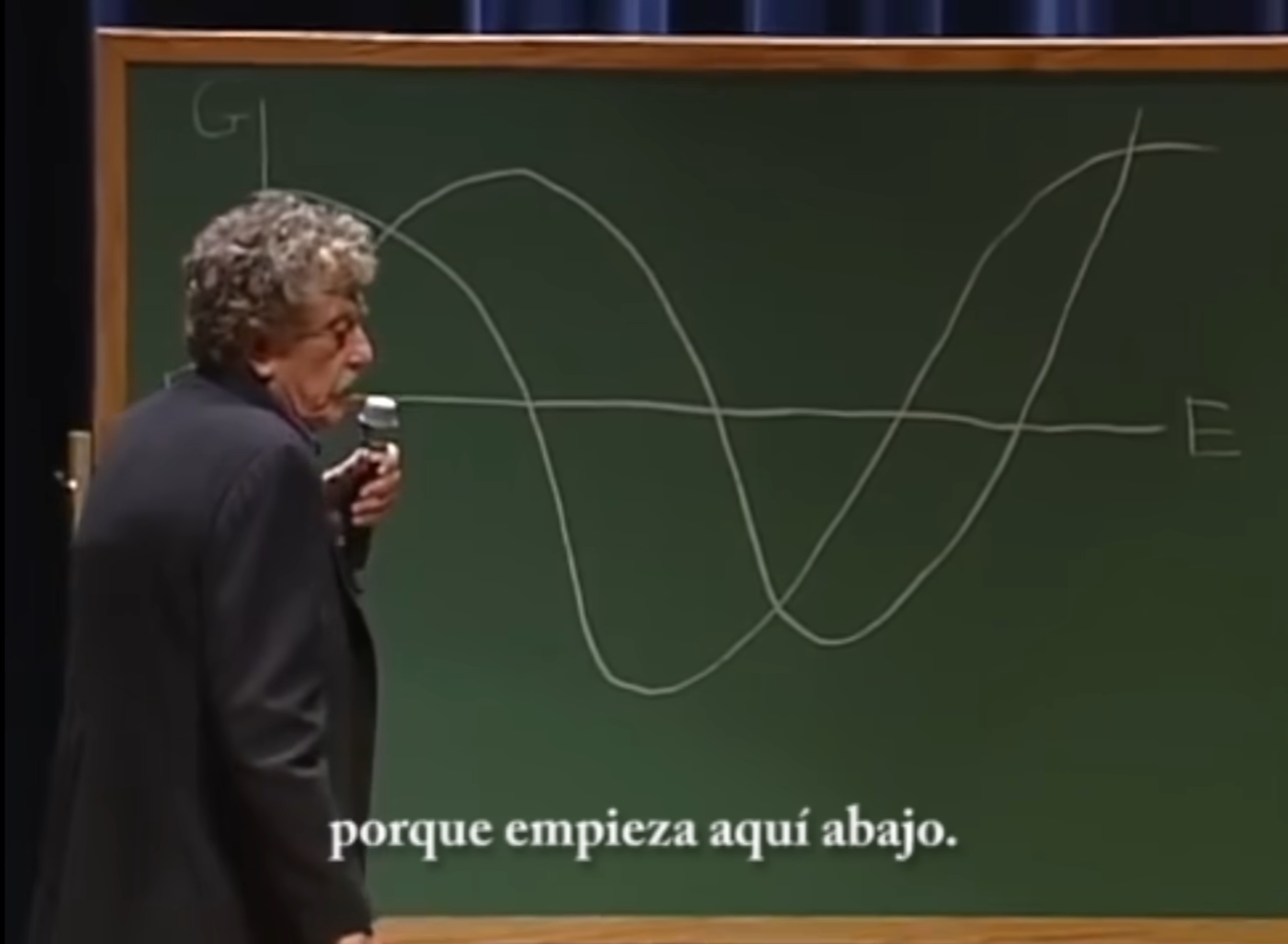
Take “Cinderella” as an example:
- Starts at the bottom (oppressed)
- Rises quickly (gets help)
- Falls suddenly (midnight returns to zero)
- Peaks again (fate reverses)
This is not a simple plot progression. It is precisely designed emotional fluctuations.
0x2 Why Does “Emotional Ups and Downs” Determine Whether Readers Continue Watching?#
There is a concept in psychology called:
Narrative Transportation
When people are truly immersed in a story, they will temporarily “leave reality”. This state is not abstract, but has a clear physiological basis:
- Conflict and tension → Cortisol rises → Concentration
- Empathy and connection → Oxytocin release → Generates identification
- Suspense and satisfaction → Dopamine release → Obtains pleasure
But the key is:
These reactions will not occur in “steady narration”.
The brain doesn’t stay for “correct information,” it only stays for “changing stimuli.”
If an article is a stable, uniform, non-fluctuating expression from beginning to end—at the neural level, it is almost equivalent to white noise.
0x3 Why Can’t Readers Finish Your “High-Value Content”?#
Many creators fall into a misunderstanding:
As long as the information is valuable enough, readers will finish it.
But the reality is:
Readers don’t need “information,” they need “emotionally driven information.”
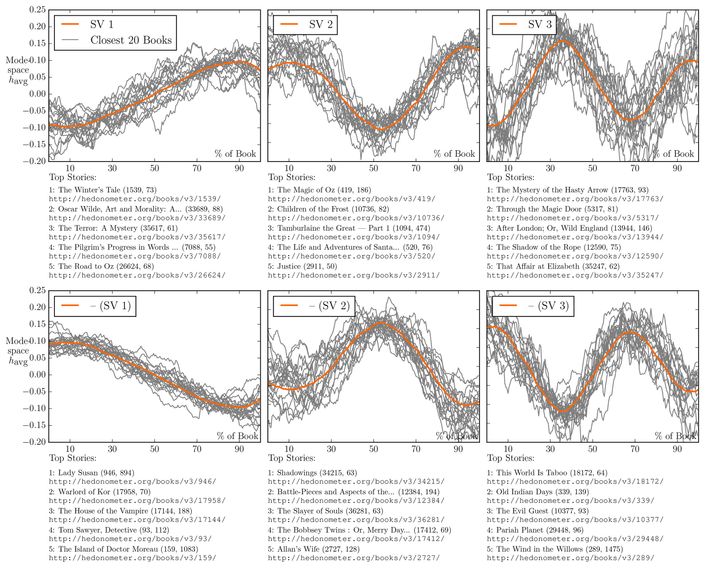
Andrew J. Reagan and his team, through natural language processing and emotional mining of 1,327 novels, confirmed that complex human narrative structures can actually be boiled down to six basic “emotional arcs”.
Truly attractive content never has a flat emotional curve.
| Emotional Arc Name | Trajectory Dynamics | Typical Narrative Direction & Psychological Projection | Commercial & Communication Success Rate (Based on Digital Platform Download Benchmarks) |
|---|---|---|---|
| Rags to Riches | Continuous Rise | From low valley to success, audience emotion turns from negative to continuous positive | Has basic attractiveness, moderate overall performance |
| Tragedy | Continuous Fall | From peak into deep valley, audience emotion slides from positive into deep negative | High (Able to trigger deep empathy and philosophical reflection) |
| Man in a Hole | Fall then Rise | Encounters sudden crisis then goes through struggle to solve crisis | Extremely High (Proven as one of the most successful commercial narrative models) |
| Icarus | Rise then Fall | Achieves staged success then destroyed by arrogance or structural failure | Extremely High (Provides the greatest dramatic tension and psychological gap) |
| Cinderella | Rise-Fall-Rise | Obtains hope - suffers major setback - finally achieves decisive victory | High (Highly applicable to long-form epics and serial content) |
| Oedipus | Fall-Rise-Fall | Suffers misfortune - short rebound and false hope - finally goes to complete destruction | Extremely High (Triggers profound psychological shock and helplessness of fate) |
Among them, Man in a Hole has been proven to be one of the most successful commercial narrative models.
It’s more like:
- Proposing a problem (descending)
- Giving an explanation (rising)
- Creating new tension (descending again)
Over and over again.
Without ups and downs, there is no attention.
0x4 Top Creators Are Actually “Designing Emotions”#
This is particularly evident in the video field.
Like MrBeast. (430 million followers, I don’t need to say more.)

He’s not just “telling a story,” he’s designing the audience’s emotional trajectory:
- Directly gives high stimulation at the beginning (grabs attention)
- When the audience is about to get tired, introduces new variables or conflicts
- Doesn’t let emotions enter a long-term stable area
Essentially, what he is doing is: Using structure to continuously intervene in the audience’s emotions.
Text is the same.
A perfect piece of text, its emotional curve must be like an electrocardiogram:
0x5 But the Problem Is: We Can’t Do It#
Seeing this, a more realistic problem appears:
We know emotion is important. But in actual writing—we can almost not perceive it.
You are “immersed” when writing:
- You know where the key point is
- You think where it’s exciting
- You think the rhythm is reasonable
But readers won’t experience it according to your feelings.
The “climax” you feel is likely just an “ordinary paragraph” in the readers’ eyes.
This is the most hidden problem in writing:
Emotion is invisible.
0x6 Most Articles Are “Blind Writing”#
When emotions cannot be perceived, creation becomes a very dangerous thing:
- You don’t know where you are losing readers
- You don’t know which paragraph becomes flat
- You can only rely on intuition to constantly modify
The result is often:
More and more information, but worse and worse reading experience.
Especially in the middle, when analysis, theory, and cases start to pile up—
Cognitive load rises, while emotion does not rise synchronously.
Readers will leave.
0x7 What If Emotion Could Be “Seen”?#
This is also why I made Subtext.
What it does is very simple:
Transform an article into an “emotional curve.”

You just need to paste the text in. Soon, you will be able to see:
- Which paragraph is sliding down
- Which paragraph lacks change
- Where “flat areas” appeared
These problems, which are difficult to detect when reading, will become very intuitive. So you no longer need to modify by feeling, but can:
- Add conflict or questions at the low point
- Add turns or cases at flat spots
- Strengthen expression at high points
Writing, from “blind adjustment,” has become “targeted optimization.”
0x8 Writing Is Like This, and Life Is Like This Too#
At the end of that lecture, Vonnegut said a very simple sentence:
“When you are going through a good time, please stop and realize it.”
Like an ordinary afternoon: sunlight, shade, a drink.
He suggests that at that moment, you say to yourself:
If this isn’t nice, I don’t know what is
This sentence seems to be talking about life. But from another angle, it actually also reminds one thing:
Emotion itself IS worth being perceived.
In writing, we always hope to design better emotional curves. But in life, we often ignore them.
The essence of writing is the organization of emotions.
And life, perhaps, is also.
Emotional arcs are just one dimension affecting a work’s performance. Next time, we will continue to deconstruct another key factor: cognitive load.